
The Ghosts of UNCG
Spooky Stories from University History
📍
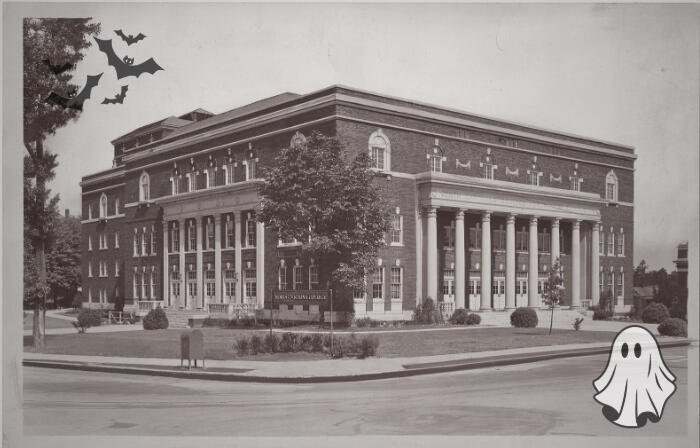
UNCG Auditorium
📍
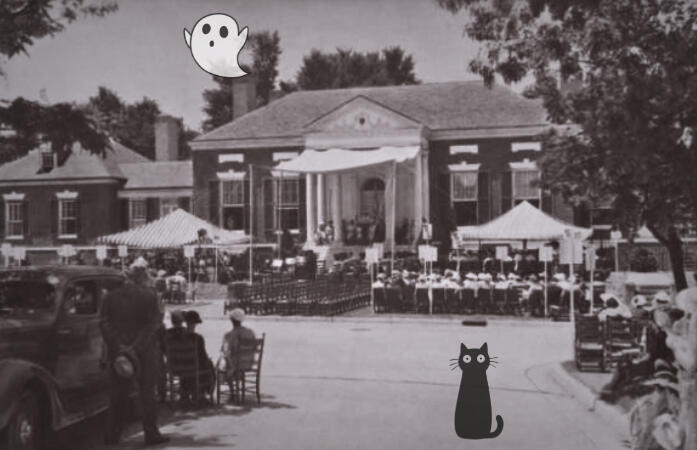
Alumni House
📍
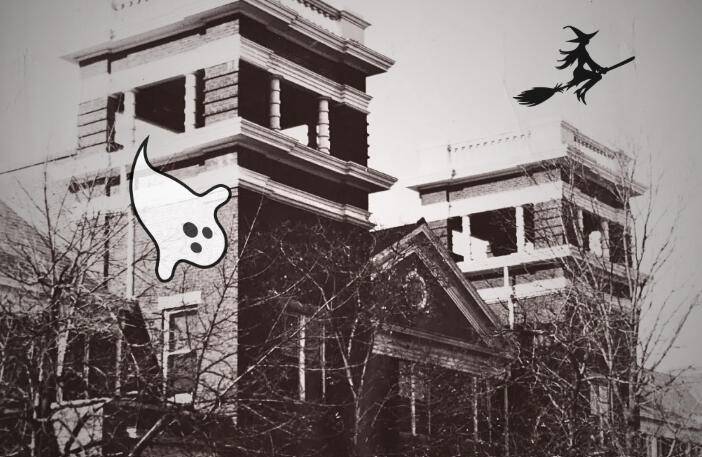
North Spencer
📍
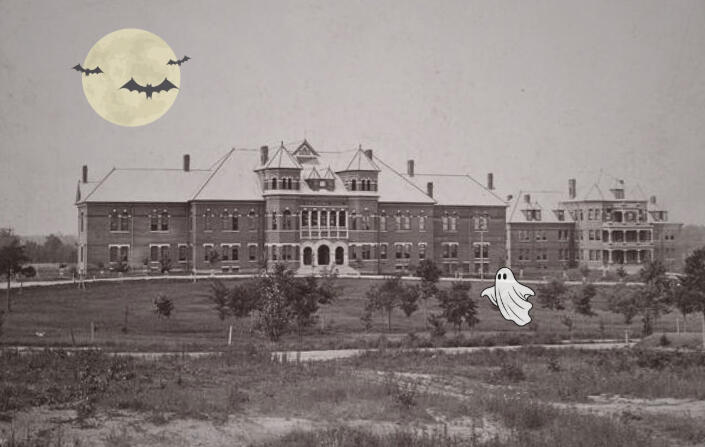
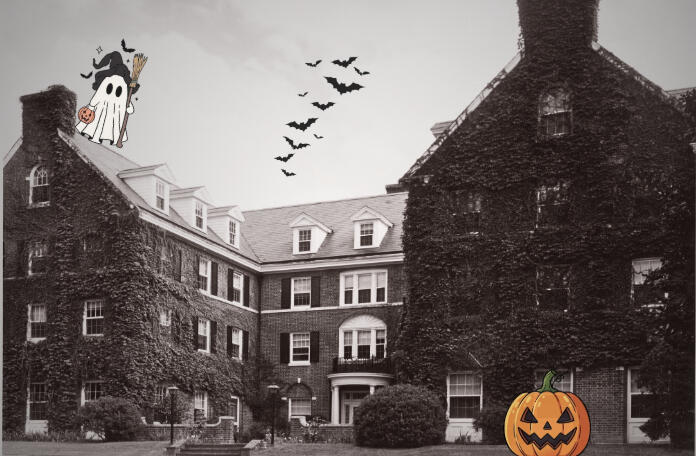
Brick Dormitory
📍
Jackson Library Tower
📍
Mary Foust
The ghost that haunts UNCG's auditorium, known as the Grey Lady, is perhaps one of the most well-known ghosts on campus. Legend says that before the auditorium was built, a colonial manor stood in its place. An old woman lived there, completely alone except for the tenets she occasionally rented some of the rooms to in order to make money. She allegedly became depressed and committed suicide by hanging herself in the attic. After she passed, the university bought the land to expand the campus, but both demolition and construction were haunted by strange freak accidents, many of them nearly fatal.
Raymond Taylor
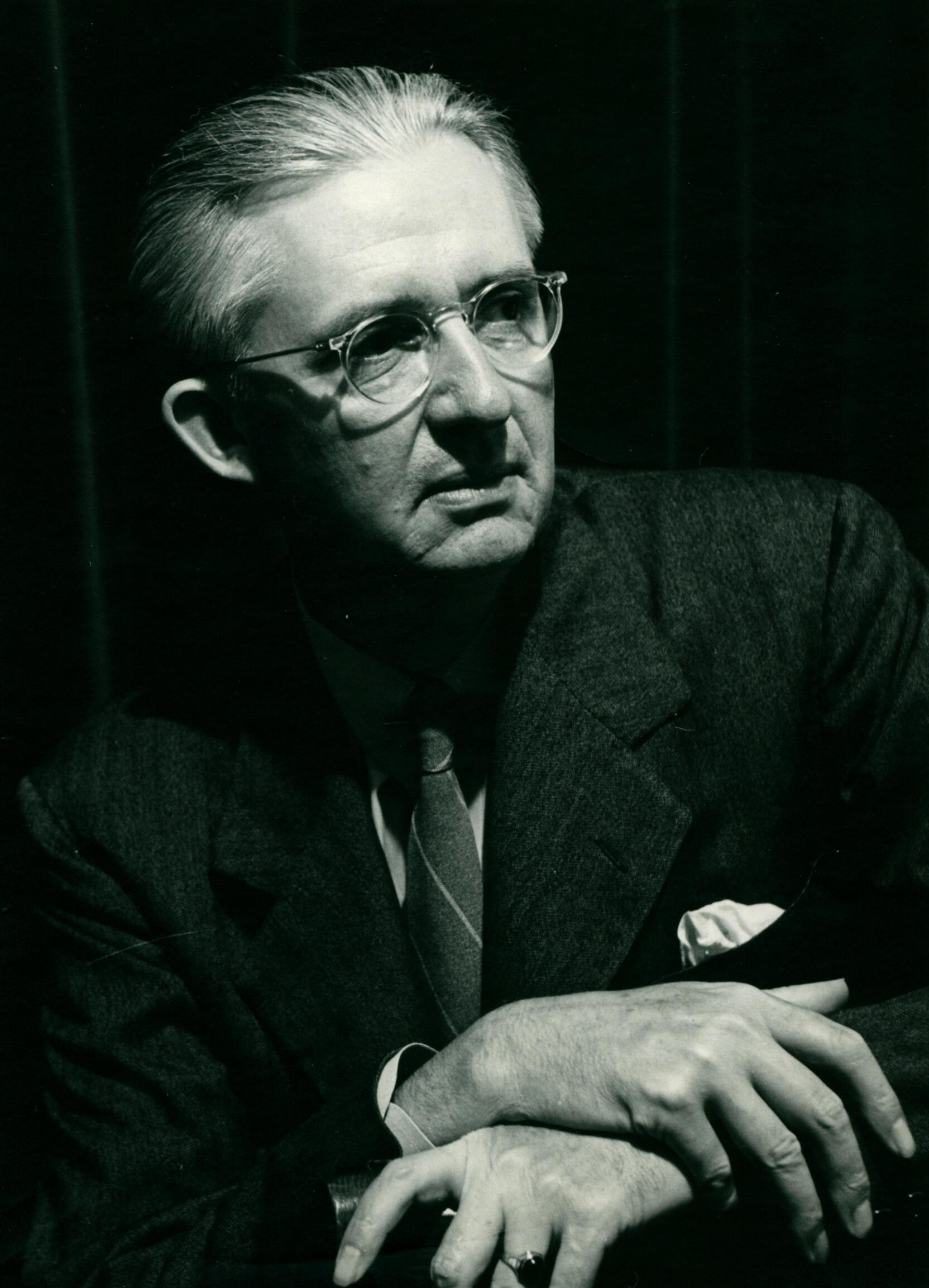
After the auditorium was finished and opened, a professor of drama and director of dramatic activities named Raymond Taylor was hired. He worked at the university from 1921 to 1960, and encountered the Grey Lady many times. He described her as appearing as lights that flitted around the ceiling and sounds of chains and clanking objects. One incident happened one stormy August night. Taylor recounts that he and a janitor were working late on sets for a play. It was extremely hot in the auditorium, so both men undressed down to their underwear. After finishing the work, Taylor went upstairs to his office, only to find his neatly organized clothes had been completely thrown around, and his pocket watch chain had been arranged in the shape of a cross. Another incident occurred when Taylor and his colleague, Jimmy Hogue, were in his office together late at night talking. The door suddenly swung open, a cold breeze came in, and the clanking of chains could be heard. An explanation was never found. Over the years, some
students have created their own folktales surrounding the Grey Lady. Many say she was the daughter of the man UNCG auditorium was originally named after, Governor Charles Aycock. They say this daughter of his, named Jane, hung herself in the auditorium and now haunts the stage for eternity. However, although Aycock did have children, he never had a daughter named Jane.
Nonetheless, the legend lives on. According to an article from 1977 published in the Winston-Salem Journal, some drama majors even used it as an opportunity to haze incoming freshmen. They would send the trembling newcomers up the stairs to the attic, reportedly the Grey Lady's favorite spot, with nothing for light but a candle. Then they would wait as the candle inevitably went out due to a certain draft, and the frightened student would scream as they noticed a human shape glowing in the darkness, which was actually a prop mannequin decorated with luminescent paint. Such a spirited trick could only come from a ghost story.
Brick Dormitory was one of the first dormitories built for students back when the university first opened in 1893. Brick had a dining hall attached to the back of the dorm to allow for convenience and ease at mealtimes, as well as a central well near the side of the building that supplied water to the dining hall tables.
In the fall of 1899, typhoid fever struck the campus. Typhoid is not a contagious illness; rather, it typically comes from a contaminated water source. Around 100 students became severely ill and were housed in the campus' original infirmary. Of those 100 students, around 48 were too sick to leave campus, and of those 48, 13 students died, as well as a staff member who stayed to help.
Out of this tragedy came a ghost story involving 2 of the 13 students who died, two sisters named Evelyn and Sarah Bailey who died about a month apart from each other in November and December 1899. Their father, who continued to support the university after his daughter's deaths, served on the Board of Directors from 1902-1916 and was eventually honored by the Bailey Residence Hall in the Quad being named after him. Brick itself burned down in 1904, and although
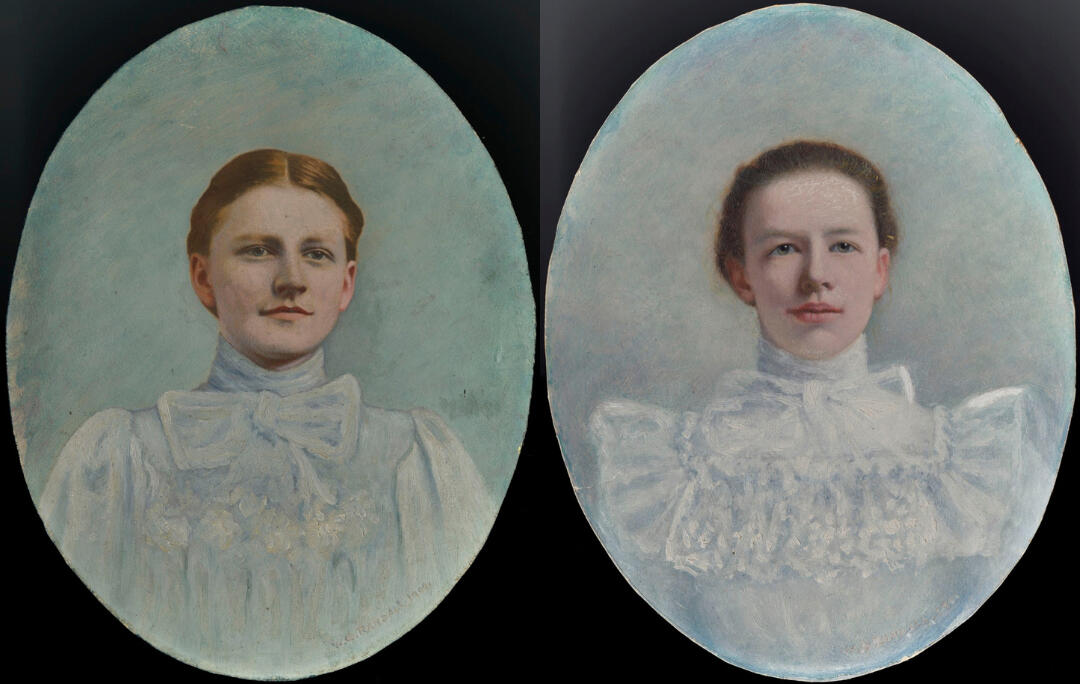
Sisters Sarah (left) and Evelyn (right) Bailey
the fire did not claim any lives, it did destroy the building beyond repair. The new Nursing and Instructional Building stands in its place today, and as for the original infirmary? It became the faculty center, which, according to paranormal specialists who visited the building as part of a campus event, is said to be haunted by the ghosts of Evelyn and Sarah Bailey, still enjoying their college campus fun.
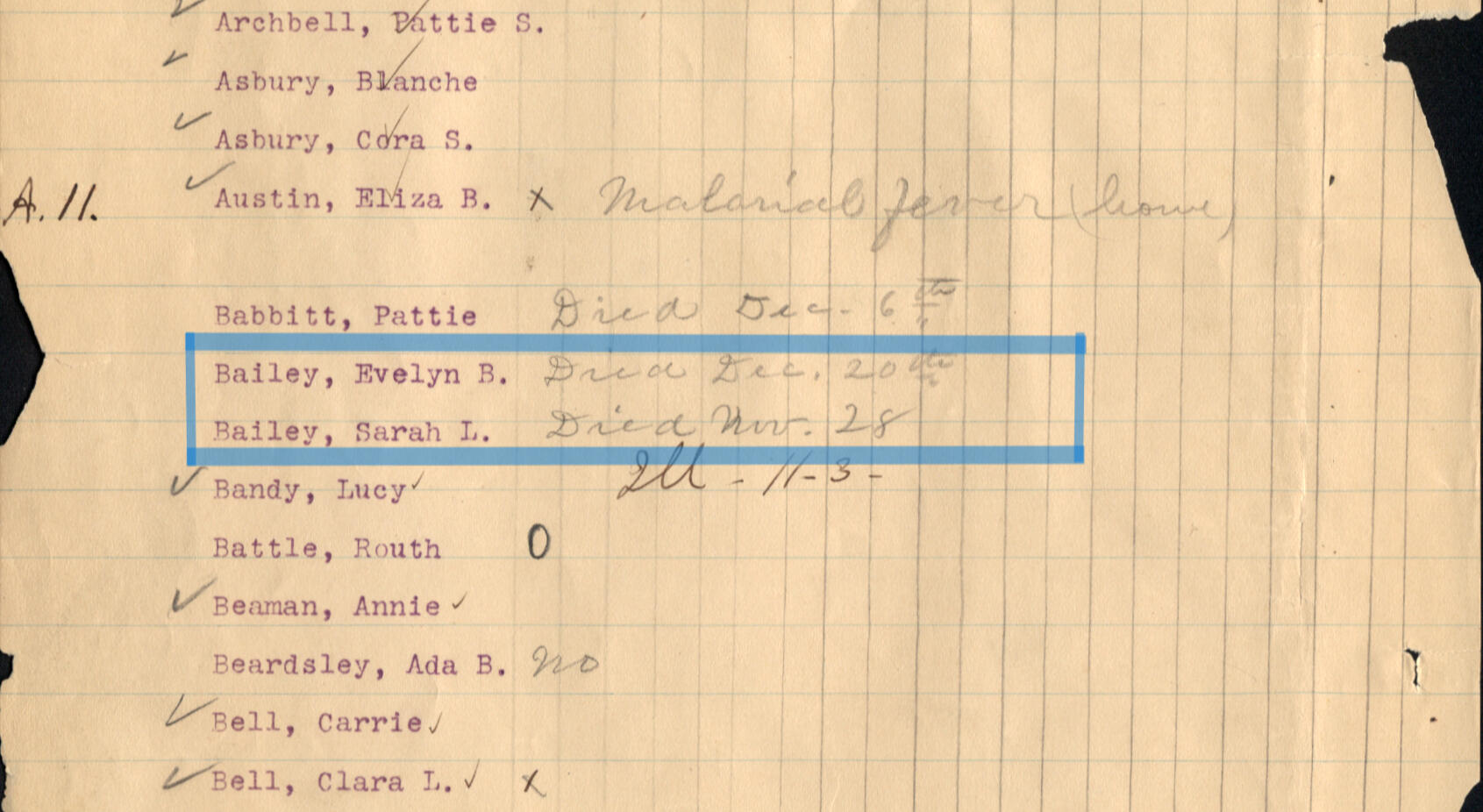
Chapel absence ledger from fall 1899, listing the sisters' respective death dates
UNCG's alumni house, now the Marcus T. Johnson Alumni House, finished construction in
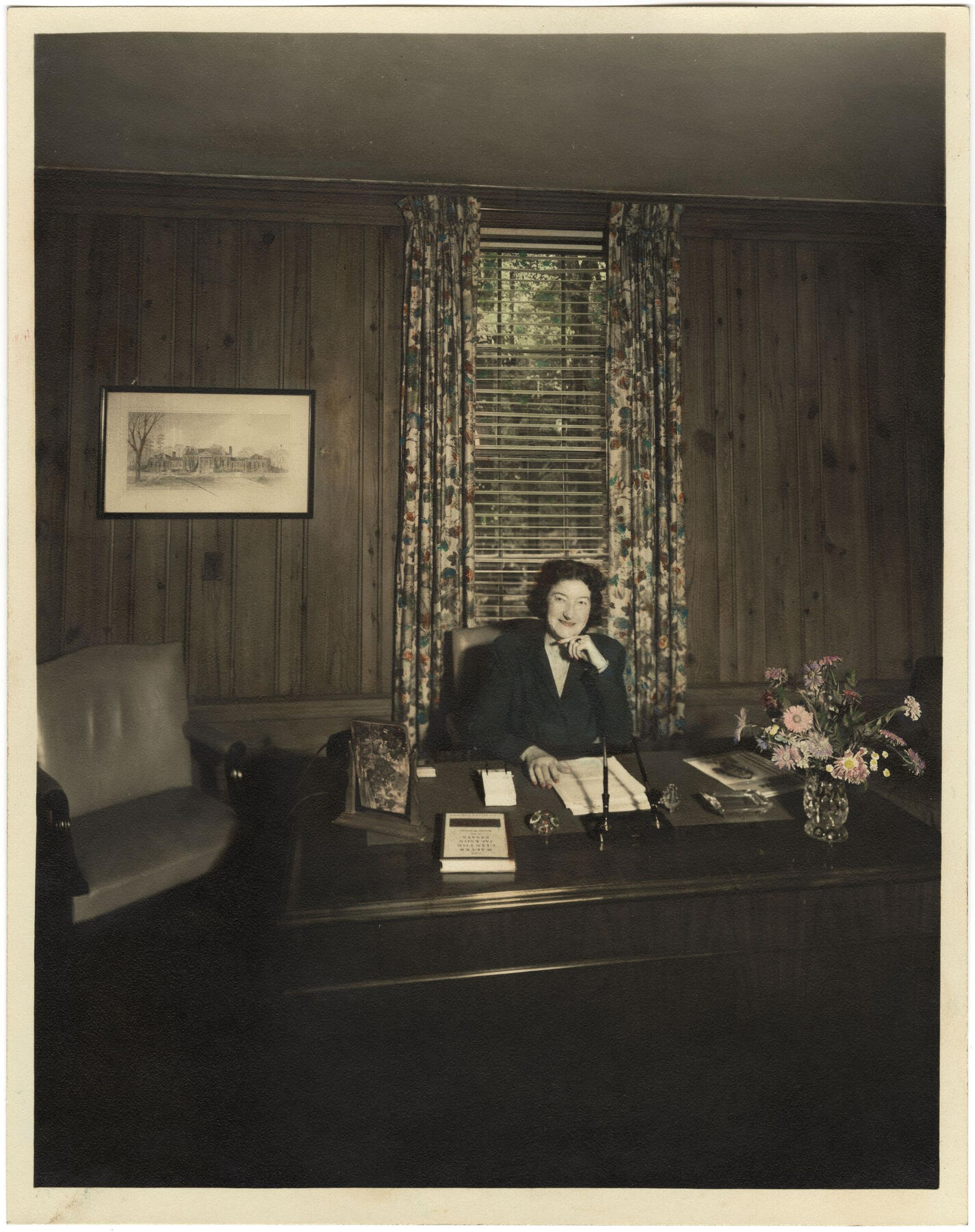
Miss Byrd at her desk in the Alumnae House
1937, largely due to the support of the Alumnae Secretary at the time, Miss Clara Booth Byrd.
Miss Byrd had been a student at the Women's College from 1908-1913. She became involved in university administration following graduation, and in 1922, she became the Alumnae Secretary and began working tirelessly to increase documentation on alumni, organize said documentation in an efficient manner, revitalize the Alumnae News, and solicit donations for the new Alumnae House.
Miss Byrd was very particular about the Alumnae House should be maintained. She insisted on leaving certain doors open, certain lights on or off, and picking out the furnishings herself. Miss Byrd resigned from her post in 1947, but there are those who think she never really left, as evidenced by a 2011 email from the current house manager who noticed that doors and lights would open or turn on, seemingly by themselves.
Perhaps it's just Miss Byrd, making sure things continue to be done her particular way.
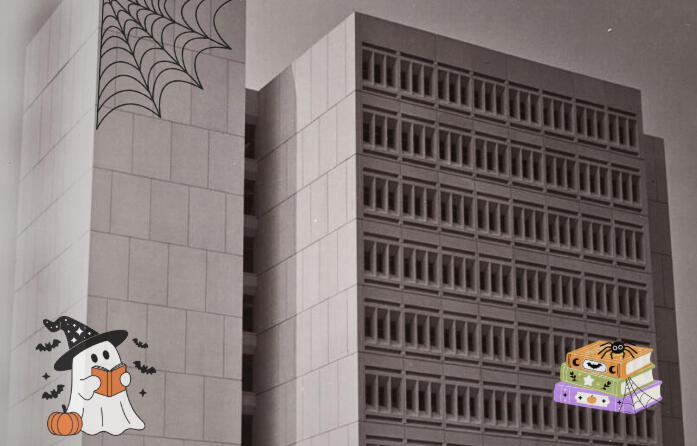
Our next stop is the Jackson Library Tower, opened in 1973 to serve as a repository for the university's growing collection of books and provide additional study spaces for students. Unfortunately, only nine years after the library's initial opening, a serious tragedy occurred.
A 21-year-old man named Kenneth Graham Crump was in his first year at UNCG when he committed suicide by jumping from the ninth floor of the Jackson Library Tower. He resided in Moore-Strong Residence Hall, but avoided the building as much as could because he felt uncomfortable and unsafe there. Instead, he would seek refuge in the library, so much so to the point that some custodial staff knew him by name. On the night of November 21, 1982, Kenneth was seen by a janitor sleeping on a sofa. Just a little over an hour later, around 1 A.M. the morning of November 22, Kenneth shattered the glass of one of the windows near the elevators and jumped to his death.
The Carolinian and Greensboro News and Record described Kenneth as being mentally unwell, with The Carolinian even referring to him as being "...under a doctor's care for apparent emotional problems." It is possible that Kenneth was struggling mentally, but others have reported that this was not the primary reason for Kenneth's suicide. According to one of Kenneth's friends, Lesa Y. Williams, Kenneth was being bullied for being gay, specifically by those living alongside him in Strong Residence Hall. This was not a far-fetched claim, as during this time, Strong had a reputation for being anti-LGBTQ+. Just three years before Kenneth's death, around 100 students had gathered in front of Strong dormitory in a "Gays Go Home" protest, shouting slurs and setting off fireworks. This protest was in retaliation to the first official meeting of the Gay Student Union in September, as well as a seminar being held to educate Strong residents in particular on homophobia.
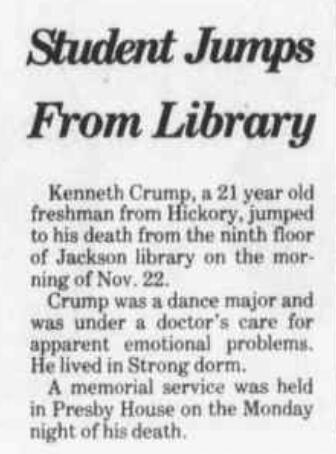
Excerpt from the December 2, 1982 issue of The Carolinian reporting on Kenneth's death, p. 1
Kenneth was a dance major, who was known to enjoy ballet, opera, and playing the French horn. We like to think that he still finds comfort roaming in the library's stacks and socializing with students, and we hope he's happy to see the route UNCG has taken in recent years to become much more LGBTQ+ friendly. Still, there are always improvements to be made, and sadly, Kenneth has never been formally honored by a memorial on UNCG's campus. The only reminder of him is in the thick, wooden rails that guard the windows to prevent another student from following his footsteps.
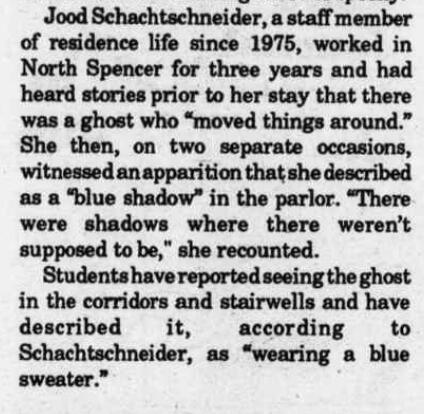
Excerpt from the October 31, 1991 issue of The Carolinian about the staff member who saw Annabelle, pp. 8-9
North Spencer Residence Hall, built in 1904 to replace Brick Dormitory, has a ghost of many names. Known as Annabelle (presumably after the titular character of Edgar Allen Poe's "Annabel Lee"), the Blue Lady, or the Woman in Blue, this ghost appears as a blue mist or haze in a female form floating around the Spencers' Shining-esque hallways. Interestingly, she's mostly been seen by staff members.
In the summer of 1976, a staff member reported hearing something being dragged on the floor in the lobby. That same staff member had previously reported seeing a blue shadow twice in the parlor. In the 1980s, other staff members were awakened by a specter walking into their rooms in South Spencer, and students have reported seeing objects move across rooms, as well as hearing someone play the piano when no one was around.
You can read more about Annabelle's activities on page 8 of the November 13, 1986 issue of The Carolinian.
To conclude our ghost tour, we offer one of the most contested hauntings on UNCG's campus, that of Mary Foust Residence Hall. Mary Foust was built in 1928 and is a mirror to Guilford Residence Hall on the opposite side of College Avenue. It's named after the daughter of the college's president from 1906 - 1934, Mr. Julius Foust.
Mary Foust was a student at the Women's College, graduating in 1920. She soon met and married a man named John Armstrong, and the couple were planning to start a family. Unfortunately, Mary died in childbirth in 1925, and when the two new residence halls were being built, students decided to name one for Mary because she exemplified so well what a student of the college should be. A portrait was made of Mary to be hung in the main lounge. Many students believe Mary still lingers around as her building's namesake, turning on lights and showers, cooling students with chilly breezes, and making loud and strange noises, such as crying and groaning. Most notably, Mary's portrait has been a source of misfortune for years. People have reported it falling off the wall, have rumored that touching it will bring back luck in the form of broken bones, broken hearts, or bad grades, and it even disappeared in the 1950s, never to be seen again. The one that hangs now is a replacement. But others wonder why Mary would
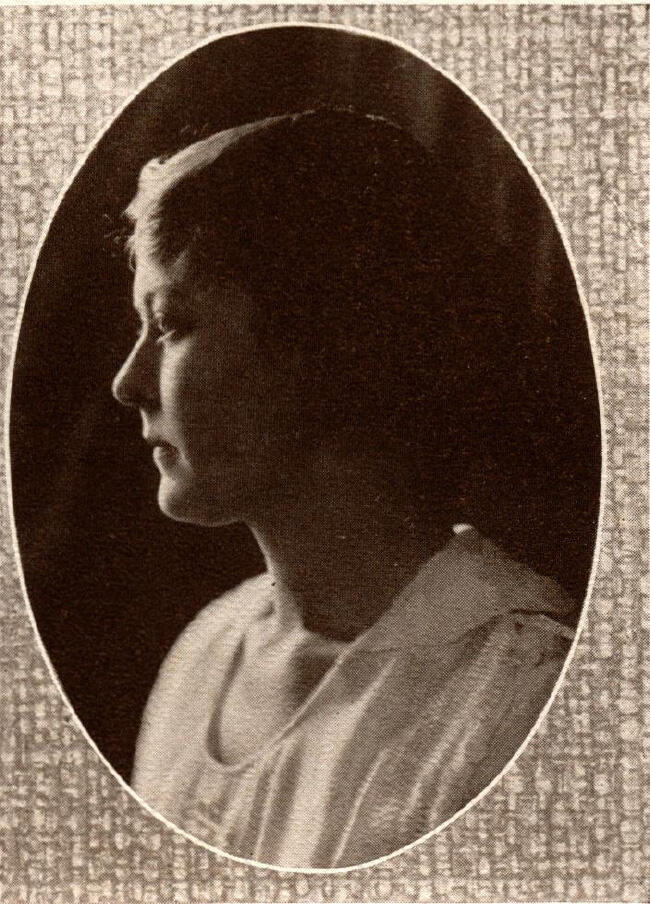
Mary Foust Armstrong
mess with her own portrait. Would she not want students to enjoy it and bring good luck to those who touch it instead? Some theorize it is not in fact Mary who's haunting the building, but a former student who tragically died after falling off a ladder in 1937, having been using the ladder to climb to the roof of Mary Foust to sunbathe in private. Regardless of who this ghost may be, we love her all the same. One might even be able to catch a glimpse of her at Mary Foust's annual Haunted House event.
To all of our ghosts, we embrace your haunts and appreciate the liveliness you bring to our campus year after year! To read more of our own students' experiences, check out the comments on a 2009 SCUA news article about campus ghosts. Here's a sneak peek.
